Showing posts with label Persia. Show all posts

Herodotus' Words: Cambyses' Maddness

The Histories by Herodotus painted the most fascinating, colorful and BS stories considering his work meant to be non-fiction. Herodotus diagnosed Cambyses with madness and in his work Histories, he wrote events which supported his claim.
Cambyses in Vigor Boucquet's
The judgement of Cambyses

Herodotus' Words: Cambyses II in Egypt

The Histories by Herodotus painted the most fascinating, colorful and BS stories considering his work meant to be non-fiction. Herodotus’ account of Cambyses invasion of Egypt was already filled with gossip and stories, but his stay in Egypt continued this flair.
Image of Cambyses with prisoners

Herodotus' Words: Cambyses II and His Conquest of Egypt

The Histories by Herodotus painted the most fascinating, colorful and BS stories considering his work meant to be non-fiction. Nevertheless, it continued to serve as a source for many historical events and personalities, from Greeks, Scythians, and Persians albeit taking them with a handful of salt. His description of the reign of Cambyses certainly tells numerous interesting stories.
Cambyses II and his retinue in Egypt in a scene by Jean-Adrien Guignet

Roads in History: Persian Empire


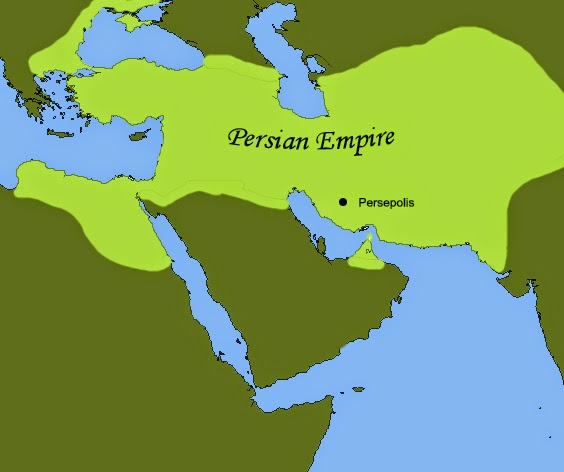
The Persian Empire was one of the largest empire that the ancient world saw. Its territories spanned through three continents. Under its rule were various groups of people and identity as well as different terrains and environment. To connect such a massive empire resulted to the creation of one of the best known road networks in history. Roads had been a way to connect lands, kingdoms, and empires. It brought great benefits to civilizations that created such networks. And one of the first well-known civilizations to use roads in a massive scale was the Persian Empire.

Ruling Persia: Satrapies

Darius the Great
The Persian Empire is the greatest and biggest empire that the ancient world could offer before the time of Alexander the Great. Its lands cover three continents. In Europe, it had a foothold in the Balkans and controlled the Anatolian Plateau. In Africa, it occupied the lands of Egypt and its neighboring lands. And in Asia, Persia dominated the whole Middle East along with Iran. Ruling such large territory was difficult. But during the reign of Darius the Great, a solution to rule was found in the form of Satrapies.

Satraps: Administration of Darius I

King Darius the Great
Administering an empire is cumbersome. A centralized government won’t work effectively if it did not manage well its local administration. Furthermore, communication and other economic aspects must be taken into consideration to manage vast extent of lands. This had been the problem of ancient Empires: how to manage a vast lands? This question or challenge was taken on by one of the ancient world’s largest empire – Persia. Under the rule of Darius the Great, Persia would undergo administrative reforms, among them would be the famous satrapies, and would enable it to maintain its positions as a power for more than a century.

Ten Thousand Immortals: Immortalizing the Persian Empire

Persian Immortals depicted during the 2,500 year celebration of the Persia.

The Persian Empire – the largest empire of Asia in the ancient world. It spanned through three continents. In Asia, Mesopotamia and Iran fell to their control. In Africa, Egypt and its peripheries were under Persian rule. And in Europe, the Anatolian plateau and parts of the Balkans were annexed by Persia. Behind this success was the Persian Army and its elite standing force, the celebrated and renowned – Ten Thousand Immortals.

Symbol of Lebanon in the Ancient World

Lebanese Flag
Lebanon is a country located in the Middle East. It is surrounded by Syria to the north and east; by Israel to the south; and the vast expanse of the Mediterranean Sea to the west. Its flag has three horizontal stripes, two red stripes with a white stripe in the middle. At the center of the flag lies a cedar tree. But why a cedar tree placed in the middle of the flag of this Middle Eastern country?

Royal Road: Highway of Persian Empire

Darius I by a Greek Painter
Roads are an important part of a kingdom, nation, and an empire. It allows economies to move, politicians to connect, and people to travel. It also directs the communications between city centers and isolated communities. Proper and good quality of roads could mean development for many. In history, road meant stagnation or domination. Empires relied on roads to connect far flung areas to the capital. It allowed armies and messengers to march and ran swiftly to their destinations. Among the greatest builder of roads were the Persians.

Popular Posts This Week