 |
| William Henry Vanderbilt |
Showing posts with label Robber Barons. Show all posts
Showing posts with label Robber Barons. Show all posts
William Vanderbilt: The Mistaken Robber Baron
Andrew Mellon: Investor to Secretary of Treasury
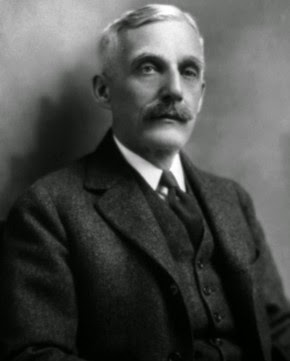 |
| Andrew Mellon |
Charles Schwab: Steel Maker and a Tragedy
 |
| Charles M. Schwab |
John Warne Gates: From Barbed Wire to Riches
 |
| John Warne Gates |
Barbed
wire is a small tool that changes the world. It changed how ranchers grew their
livestock. It’s a tool used to keep prisoners inside their prison. It changed
the faces of battlefields forever. During the advent of this small but decisive
tool, many took the opportunity to make some money from it. But one man stood
to dominate the industry. A man that did not invent barbed wire but used it to
made a fortune from it. A fortune that so huge that a million dollars can be
easily loss in one poker game.
Daniel Drew: A Victim of His Own Ways
 |
| Daniel Drew |
In 1868, a war of business tycoons erupted. The price was the
lucrative line of Erie, connecting New York to Illinois. In one side, the
powerful and influential ferryman turned railroad King, Cornelius
Vanderbilt. On the other side, the Erie Ring, composed of men who were
highly regarded as cheats and unscrupulous. It was composed of Jim
Fisk, Jay
Gould, and another unexpected faithful turned roguish speculator, Daniel
Drew.
Jim Fisk: Manipulator, Speculator
 |
| James Fisk |
After the Civil War, America experience a rapid reconstruction followed by unprecedented industrialization. Government did not
dominated the scene but businessmen, speculators, and bankers. Among the most
prominent, infamous, and unscrupulous of these men was James Fisk. Ruthless and
greedy, he inflicted torment to his enemies and even to his own company.
The Life of Jay Gould
 |
| Jay Gould |
Erie War: Watered Stocks and Unregulated Capitalism
 |
| A caricature of the Erie War |
He started as a ferry tycoon. But from the flames of the Civil
War, a new booming industry emerged – the railroad industry. A man with
tenacity and ruthlessness, Cornelius Vanderbilt entered the rising industry to
get a share of the profits. In 1860’s he managed to take a hold of the
important New York Central Line that connected New York City to the western
part of New York State. However, this was not enough. He wanted as well take
control of the second line that went farther to Chicago, which was held by Erie
Line. His attempt to grab the line would spark what would be known as the Erie
War.
John Jacob Astor: King of Fur
 |
| John Jacob Astor |
America
is the land of opportunity for migrants hoping for a better life. America began
when Europeans started to move to the New World from the 17th-century. After
the first thirteen colonies won their independence, many continued and began to
realize their dreams in the newly independent United States. One of these
individuals was a German immigrant that rose to become the first of the most
influential and wealthy men in the country.
Cornelius Vanderbilt: Ferry Owner Turned Railroad King
 |
| Cornelius Vanderbilt |
Transportation is a viable mode of traveling from
one place to another. It allowed economies to grow. It allowed people to see
different places besides their home. The bigger your country, the more the mode
and more integrated the transportation should be. The United States is one
example of these big countries and during the 18th-century, many cash in on
this industry. Among of this transport tycoons is the competitive
"Commodore" Cornelius Vanderbilt.
J.P. Morgan: The Giant of Financial World
 |
| J.P. Morgan |
Most
of the greatest tycoons of the Gilded Age were rags to riches stories. From a
poor humble background, to a self-made man, to a great industrialist criticized
for his practices, this is the usual story line of great businessmen like
Rockefeller and Carnegie. However, it cannot be said the same for John Pierpont
Morgan. His story was that of someone born to a rich and affluent family.
Fall from Grace: The Homestead Strike of 1892
 |
| Worker behind a cover during the shoot out |
Cleveland Massacre: The Rise of Standard Oil
 |
| John D. Rockefeller (1870's) |
In winter of
1871, a collusion was form between the railroads and the oil industry. As the
two began to execute their devious plan to corner the railroad and oil industry
under the name of South Improvement Company, the public, especially the press,
protested against the monopolistic intentions of the group. As a result, the
South Improvement Company disappeared with the winter. However, when spring
bloom in 1872, so as a new powerful company also appeared, a bigger and
stronger company of the oil mogul John Rockefeller, Standard Oil.
Andrew Carnegie: Steel Man and Philanthropist
 |
| Andrew Carnegie |
The
modern world has seen developments in communication with smart phone flooding
the market. Most people now live in cities with skyscrapers appearing over the
skies. Weapons of war developed rapidly with new modern tanks and fighter
planes liter the battlefield. All of these developments owed to one material –
Steel. During the 19th-century, steel was just at its infancy. However, many
saw potential with these new material. One man that made a huge profit out of it
and began to produce it in large quantities, paving the way for a new modern
industrialize America.
South Improvement Company: Start of a Monopoly
 |
| Thomas Scott (Left) and John Rockefeller (Right) |
John D. Rockefeller was
known as the man who monopolized the American oil industry for some decade. He
dominated 90% of the North American oil trade. He beat down his competitors
with predatory efficiency and ruthlessness. Rockefeller earned strong opposition
and criticism. Finally, in 1911, his most cherished business, the Standard Oil,
was found guilty of being a monopoly and break up into several companies, which
some became powerful oil companies. The story of the creation of the monopoly
of Standard Oil began in 1870’s as a collusion of interests and advantages
under the name of South Improvement Company.
John D. Rockefeller: Robber Baron, Oilman, Billionaire
 |
| John D. Rockefeller |
Oil is one of the most treasured and valuable
commodity in the world. Many countries, especially China, want to get a hold of
it. Most of the oil reserve is owned by great billion-dollar companies such as
Chevron, Mobil, and Exxon. But during the 1800’s, the advent of the black gold,
a company was formed that became the root of the mentioned companies and from a
man that is known as the richest person ever.
Subscribe to:
Posts (Atom)
Popular Posts This Week
-
.JPG) BASF Factory (1881) She emerged as the most industrialized country by the end of the 19th century. Germany surpassed the home of the i...
BASF Factory (1881) She emerged as the most industrialized country by the end of the 19th century. Germany surpassed the home of the i... -
 John Cockerill The industrial revolution changed the world. It caused a shift from people relying on farming in the countryside to wor...
 -
.jpg) Great Britain and France – a rivalry that ran for more than a half a millennium, but in the quest for industrial revolution, unfortunatel...
Great Britain and France – a rivalry that ran for more than a half a millennium, but in the quest for industrial revolution, unfortunatel... -
 Emperor Meiji Japan’s independence came under threat from the increasing presence of westerners in Asia. In 1858, the ships of Ameri...
 -
 Babur The Taj Mahal, symbol of the wealth and affluence of the Mughal Empire. Built by many workers for many years. Workers are fed fr...