Showing posts with label Warfare. Show all posts

Iran, US, and the Forgotten World War II Lesson

The Iran Crisis of 2026 just exposed the United States has forgotten the lessons of World War II.  A War, not just fought in the seas, landing beaches, and fields, but also in factories. The role of manufacturing, mass production and cost that played a significant role the Allied Victory.

Self-Strengthening Movement and Qing Industrialization - Part 2


Heraclitus said “There is nothing permanent except change” and it applies to life at the smallest and to society at the largest. When faced with challenges and difficulties, a change in ways seemed the correct path, but the question that follows: how to change or what to change? This question represented the Self-Strengthening Movement and its quest for the industrialization of China under the Qing Dynasty.

Self-Strengthening Movement and Qing Industrialization - Part 1


Heraclitus said “There is nothing permanent except change” and it applies to life at the smallest and to society at the largest. When faced with challenges and difficulties, a change in ways seemed the correct path, but the question that follows: how to change or what to change? This question represented the Self-Strengthening Movement and its quest for the industrialization of China under the Qing Dynasty.

Who was Bandar Singh Bahadur?

Guru Gobind galvanized a generation of Sikhs earning him enormous respect second only to Guru Nanak. After his assassination in 1708, he said to have ordered a slave of his to punish the Mughals that have done harm to Sikhism. This man who declared himself as a servant of the Guru named Banda Singh Bahadur.
Banda Singh Bahadur (image from sikhwiki.org)

Who was Guru Gobind Singh?

If Guru Hargobind established the foundation of Sikh martial tradition, Guru Gobind built the structure that furthered the militarization.

The Rise of Sikh Military - Guru Hargobind

Release of Guru HargobindSikhs made a name for themselves as ferocious soldiers. They served in major conflicts in modern history, from the wars of India and Pakistan, the 2 World Wars, or even British war for imperial expansion. How the Sikhs whose religion promoted harmony developed a reputation as valiant warriors?

5 Great French Commanders of the Franco-Dutch War

The Franco-Dutch War was the first major conflict where King Louis XIV embroiled his kingdom in and faced the might of Europe's major powers. Behind King Louis' ambition stood his generals from different backgrounds, innovations, and  achievements.
Battle of the Dunes

Marquis de Louvois and the Reformation of the Royal French Army

Louvois had been credited into building a formidable fighting force that realized the imperial dreams and ambitions of his King Louis XIV.

Who were the Le Telliers?

Arising with the Sun King, middle class statesmen rose to prominence and influence. Among them a family that produced a dynasty in the war minisry - the Le Telliers. 
Marquis de Louvois

The War of Devolution

Betrayal, bribery, and ambition plagued European politics in the 17th century. Alliance came and go and war remained constant to grab as much territory as much as possible for whatever the reason. The War of Devolution (1667 -1668) illustrated this.

Great Leaders: King Kamehameha I (Part 3): Unifying the Hawaiian Islands

Kamehameha as depicted in Civilization V
After the fall of Kiwala’o in 1782, Hawaii’s geopolitical situation dramatically changed. The once united island kingdom of Hawaii had been divided into three kingdoms ruled by Kamehameha, Keoua, and Keawema’uhili. Beyond the island of Hawaii, conditions also changed significantly. After centuries of brutal fighting between numerous higher chiefs, a single leader emerged as the most prominent. Kahekili – King of Maui Island – took control over Molokai, Lanai, Oahu, and indirectly ruled Kauai, through his brother’s assistance. Kamehameha’s destiny as prophesied during his birth seemed slipping away and taken by Kahekili. How Kamehameha turned things around and became the unifier of Hawaiian Archipelago?

Great Leaders: King Kamehameha I (Part 2): Unifying the Home Islands

Kamehameha as depicted in Civilization V
Kamehameha faced tremendous challenges as he assumed his position as one of the high chiefs or ali’i in the big island of Hawaii. After a bloody civil war, the island had been split into three ruled by him, Keoua, and Keawema’uhili. Outside the island of Hawaii, King Kahekili of Maui had advance his domains to the islands of Lanai, Molokai, and Oahu. He even controlled indirectly through his brother the islands of Kauai and Nahuii. Kamehameha faced a though threat outside Hawaii and faced division within his home island. How could he unite all Hawaiian island if his home island itself suffered division? How Kamehameha did united his home island of Hawaii?

Antonio Lopez de Santa Anna II

Antonio Lopez de Santa Anna
From a military man to a political leader of volatile nation. Never such a man had the ambitions and drive to become the President of Mexico for eleven times. In each term, he ruled Mexico with an iron fist and a hand that squandered the wealth of his impoverish nation for his vices. General Antonio Lopez de Santa Anna, remembered for his victory in the Alamo but his country knows him both as a hero and villainous tyrant.

Hidalgo Revolt: For the Independence of Mexico

Miguel Hidalgo y Costilla
by Jose Clemente Orozco
It was the revolt that moved a country towards independence. The Revolt Fr. Miguel Hidalgo plunged Mexico to a decade long war for independence. A revolt rooted from centuries of oppression, inequality, and discrimination, it brought out the best and the worst of men. A revolt drove by anger and vengeance that ultimately caused Hidalgo’s downfall.

The Satsuma Rebellion

A rebellion caused by disillusionment and neglect. The Satsuma Rebellion, led by Saigo Takamori, it synthesized the discontent that the samurais felt under the rapidly changing culture under the new Meiji Era. The rebellion could that could have change the fate of Japan’s transformation.

Fukoku Kyohei: The Slogan that Defined Meiji Japan

Industrialization allowed Japan to attain modern weapons for its defense and military campaigns
It was a slogan that summed up the ideals of the Meiji Era. Fukoku Kyohei, meaning Enriching the Country, strengthen the army or Rich Country, Strong Army, became the principle that led to the modernization and transformation of Japan.

Cinco De Mayo and the Causes of French-Mexican War

Battle of Puebla
The United States celebrates Cinco de Mayo more than the Mexicans. The origins of the event, however, marked a victory of rag-tag Mexican army against a more powerful, well trained and well-armed French army on May 5, 1862. It became known as celebration for the victory of the oppressed against the oppressors. However, as time went by, the celebration died down in Mexico, nevertheless, its memory remained in many Mexicans, especially those who immigrated to the United States where it turned to a celebration one own culture.

The Pastry War: The War for Redemption

Bombing of San Juan de Ulua
Mexico had a rough 19th century. It became independent from Spain during the early half of the 1800’s. But after declaring independence, it had a tumultuous internal politics filled with infighting, ambitious men, and imperialist threats. By 1830’s Mexico suffered a horrendous situation, including loss of territories and economic crisis. Eventually, it led to Mexico’s first taste of a gunboat diplomacy of a European imperialist on the conflict known as Pastry War.

The Cochinchina Campaign

Capture of Saigon
Indochina, composed of modern day Laos, Vietnam, and Cambodia, became the center of French imperialism in the Far East. For more than half a century, they subjugated the local people for economic benefits. The conquest that led eventually to the creation of the French Indochina began in the middle of the 19th century. The French first displayed their might through the conclusion of the issue concerning a missionary and the bombardment of the major port city of Touraneor modern day Da Nang in 1847. A decade later, they launch a campaign in southern Vietnam, then known as Cochinchina, that sowed the seeds of the French in Vietnam, leading the path towards the formation of the French Indochina.

Lefebvre Affair and the Bombardment of Tourane

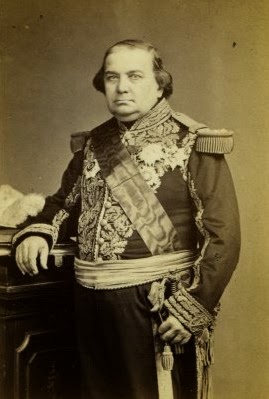
Charles Rigault de Genouilly
Tourane, Vietnam, 1847 – two warships came to the coast. The warships had French flags and demanded the release of one of its missionary – Dominique Lefebvre. Suddenly, the French began a bombardment of Tourane. But events prevailed before the Bombardment of Tourane? What happened during the Bombardment? And lastly, what happened after the incident occurred?

Popular Posts This Week