Showing posts with label 16th century. Show all posts

11 Rulers of the Aztecs of Tenochtitlan

The Florentine Codex in its Book 8 titled Kings and Lords listed the names and a summary of events of the 11 rulers of the Aztecs. Below are the list and the paraphrased summary from the codex.
A European map of Tenochtitlan

10 Things to Know About the Aztec Empire's Rise and Fall

A powerful and feared civilization in Mesoamerica that faced the Conquistadors, the Aztec earned their place in the annals of history for their blood thirsty sacrifices and their duration as an Empire. Here are 10 things to know about the rise and fall of the Aztec Empire.

Jurchen Economy and the Rise of the Qing Dynasty

Ginseng – a root crop known for its health benefits especially in Asia became popular in the late 16th and early 17th century that it contributed to the fall of the Ming Dynasty and the rise of the Manchu Qing Dynasty.

How did the Edict of Fontainebleu brought France down?

France in the 18th century would have defeated Great Britain as the super power of the world if King Louis XIV did not introduced the Edict of Fontainebleau, a declaration of persecution of Protestant within his realm.

St. Bartholomew's Day Massacre

By Francois Dubois
The 16th century became rattled by religious divide throughout Europe. The Holy Roman Empire became divided over the Protestants and the Catholics. France, the other major power other than Spain, also became embroiled in bitter religious wars between Catholics and the French Calvinist Protestant called Huguenots. In 1572, it appeared that the worst was over until suddenly, Paris and the whole of France was shocked with violence that was known as the St. Bartholomew’s Day Massacre.

The Legendary Winged Hussars of Poland

Winged Hussar of Poland
Poland was a kingdom with a powerful cavalry force. Its neighbors knew the strengths and the prowess of its mighty cavalry. In 1638, during the Siege of Vienna, a Polish King march to Vienna. With him was an army with cavalry that stroke fear and spectacle with a display of creativity within their uniforms. The Winged Hussars of Poland became the icon of Poland’s military might.

Stockholm Bloodbath

Stockholm Bloodbath and the desecration of Sten Sture's grave
The Kalmar Union began in the 14th century with the idea of one King for the three kingdoms of Sweden, Denmark, and Norway, but each retaining its own laws and Council of Realm. However, from a series of autocratic kings and failed campaigns against the powerful Hanseatic League, fracture began to appear within the Union. Most especially, Sweden became critical about its part within the Union. Sweden resented the idea that their King ruled them from a foreign and distant city of Copenhagen. They also hated the economic crisis brought by the anti-Hanseatic League stand of the Kalmar Union Kings. Ever since, Sweden always became a focal point of rebellion and a problem for the King of the Union.

Askia Mohammad: The Zenith of the Songhai Empire

Askia Mohammad depicted in Civilization V
The Songhai people rose from the obscurity of the once mighty Mali Empire to become the newest empire in the region thanks to the efforts of its founder Sunni Ali. Sunni Ali died in 1492, leaving his son in charge of the Empire. However, it would be interrupted by the ambitions of one of Ali’s most trusted general – Mohammad Ture or better known as Askia Mohammad. This cunning and tenacious general would march the Empire into its golden age.

Songhai Empire: The Last Great Empire

Songhai Empire
In area of Western Africa, great civilization appeared and fell. Cities like Timbuktu, Gao, and Djenne (Jenne) were just among the flourishing cities of trade, culture, and education. Trans-Saharan trade of cloth, gold, and salt brought wealth and prosperity to the civilization that control such lucrative routes. Rivers provided fresh water and food that sustained empires for long time. Among the last empires that grew in this part of the world is the Empire of Songhai. From obscurity of a shadow of another empire, it grew to become the dominant power in the area.

Potosi: The Mine that Changed the World

Sketch of Potosi in 1533
The discovery of the Americas was just the start of an exploration of a land that had so much potential and resources. A new economic order in Europe brought so much change in trade and economic perspective and policies. This new policy, called Mercantilism, brought the need for the control of sources of raw materials as well as new markets for manufactured products. This led to a wave of imperialism, colonialism, and a search for sources of wealth. The Spanish, in particular, were keen to discover El Dorado, the city of gold. But what they found out in the Peruvian highlands was almost similar in size of wealth. Cerro de Potosi would change a landscape of the mountain itself and world commerce as a whole.

Sea Beggars: The Foundation of the Dutch Navy

William "the Silent"
In the upheavals of the Protestant Reformation, the Spanish Netherlands of Philip II saw the rise of a new world power. The Dutch sought to make their own destiny. A destiny impossible under the Spanish hegemony. As a result, a war that would last over eighty years rocked the Low Countries. At the front of the conflict were group of seafarers that would later lay the ground work for the Dutch navy – the Sea Beggars.

Holy League: The Victors of Lepanto

Battle of Lepanto (by Juan Luna)
Conflict between the Muslims and Christian had raged for centuries dating back to the time of crusades. The whole of Christendom in Europe hoped to halt or even to push back the advance of Muslims during the Crusades. And during the time of Renaissance, the Muslims, in form of the Ottoman Empire threatened the whole Europe itself. And so in 1571, the Pope called upon the creation of the Holy League.

Schmalkaldic League

John Frederick of Saxony
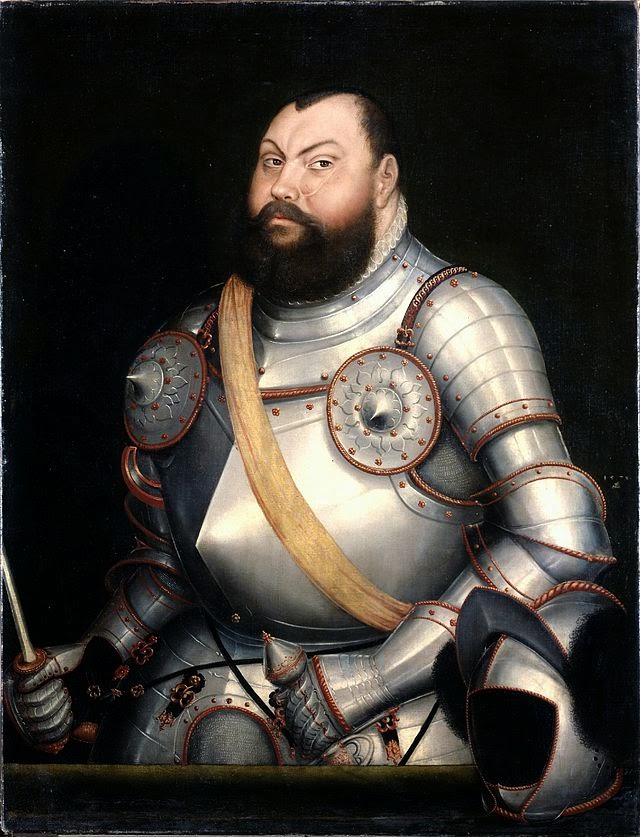
In a period of chaos and division, small nation came to together to form a strong defense alliance that would aim in protecting their interest, this was the condition of the 1500’s Holy Roman Empire. The Holy Roman Emperor aimed in securing his imperial rule and the imposition of his Catholic ideals. A group of small Protestant states feared there demise. And as a result, they formed an alliance that would be known as the Schmalkaldic League.  

Swabian League

Augsburg (1493)
There was no Germany during the Medieval Ages, but there were German states. After the death of Charlemagne in 814, the Holy Roman Empire had politically disintegrated rapidly into several entities. Some became virtual independent duchies and city states. In order to maintain independent but with a credible defense, forming alliances was the most practical way. In the north, the Hanseatic League provided this defense alongside commercial prosperity. In the region of Swabia a same alliance was form – the Swabian League.

The Lunda Empire of Central Africa

H. M. Stanley
In the 19th century, the travels of Henry Morton Stanley brought exploration of the region of Central Africa. Back in Europe, as the Industrial Revolution continued to gain momentum, more and more resources were needed to sustain the growth of various industries. Belgium, a growing industrial nation, was looking into establishing a colony somewhere. And when the words of Stanley’s travels was heard, the Belgian move in to the modern-day Congo to establish its biggest colony. However, as they began their conquest, they saw a civilization that occupy the whole region. An empire that belonged to the Lunda people existed at their front.

Gonzalo de Cordoba: Revolutionizing Warfare

Gonzalo Fernandez de Cordoba
The 16th century saw many changes in world history. New continents found. New ideas spread. Era of Henry VIII, Leonardo Da Vinci, and many more became well known during this century. Along with new lands and new ideas, a new weapon was crafted that would change the world forever – the gun. It revolutionized warfare, but during the 16th century it was in its infancy. Many was still dumbfounded of its capability. But one country managed to found its potential and used it, the country of Spain.

Popular Posts This Week