Showing posts with label Business. Show all posts

10 Things to Know About James Mayer de Rothschild

A towering figure that held no crown, nor office nor led armies, yet his handling of wealth brought him influence and contributed in changing the landscape of France in the 19th century. He inspired both admiration and a conspiracy of “space lasers.” Here are 10 things to know about James Mayer de Rothschild.

James Mayer de Rothschild: Railroad and Banking King of France

Kings and Prime Ministers sought his advice and bow to him for loans and investments. Vast lengths of railroads and landscapes transformed by rising factories came as a result of his confidence. James Mayer de Rothschild commanded great respect within the banking world of his time driving forward France’s industrialization. How did he achieve it without holding office nor leading armies?

The Henry Ford

Henry Ford
One of the icons of American business and automobile industry. He revolutionize the manufacturing of cars, bringing it to the masses. His innovations gave him a sparkling name, but his later years, tarnished his reputation and became notorious in the eyes of the public. Henry Ford rose from humble beginnings into one of the greatest magnates in the early 1900's.

Yasuda Zenjiro: The Founder of the Fourth Largest Zaibatsu

Yasuda Zenjiro
Founded the Yasuda Zaibatsu, he came from a poor background but rose to prominence in the financial world from his money changing business. He cashed in the development of Japan and made huge fortunes that landed his company as the fourth largest Zaibatsu or conglomerate in country.

Minomura Rizaemon and the Survival of Mitsui

Suruga Street with Echigoya in the left
(Today: the Right side is occupied by the
Mitsui Main Building)
Japan faced an economic transformation after the 1860’s. She pursed the path of transformation from an agricultural medievalist country to an industrial, modern, and westernize country. Many business had to adopt to the situation or face bankruptcy, which happened to many old enterprises. But some merchant houses succeeded to transform. They did not just survive but they grew to become powerful conglomerates know as Zaibatsu. The biggest of this Zaibatsu was the House of Mitsui that flourished under the management of Minomura Rizaemon. 

Ludvig Nobel and the Baku Oil Industry

The 18th century saw a boom in the oil industry. The United States dominated the industry with its leading company, Standard Oil. But it faced competition from the other side of the world – Russia. The oil city of Baku challenged American domination of world’s oil supply. In this city, it saw the rise of another member of the Swedish family Nobel – Ludvig or Ludwig Nobel.

Gustavus Swift: A Revolution in the American Meat Industry

Gustavus Swift
The industrial revolution in the United States became home of some of the greatest innovation that made the modern world. From electricity to automobile, Americans used their curious mind to solve challenges and create solutions that make the world better. The food industry also got a share of some of innovations. Among the men that profited from it was the founder of one of the most famous food meat processing companies in the United States – Gustavus Swift.

William Wrigley, Jr.: Gum Magnate and Advertising Genius

William Wrigley, Jr.
William Wrigley, Jr. (September 30, 1861 – January 26, 1932) owned the biggest gum manufacturing company in the world – Wrigley’s Chewing Gum. From an energetic but a mischievous kid, Wrigley started as a labor and rose to become a salesman. His experience as a sales gave him the skills needed to advertise a product. With one his gimmicks he discovered a candy that gave him millions – chewing gum. He then establish himself a major player in the industry, took risk, and became number one. He then used his wealth to various investment and interest. Upon his demise, he left a huge wealth and a prospering company to his son.

Francis Cabot Lowell: From Industrial Espionage to Industrial Revolution

An industrial revolution allowed the United States to propel itself to the top of the world. It owed it much to the ingenuity and skills of its many mechanics and inventors that developed new machines and system to manufacture numerous goods in a short period of time. Francis Cabot Lowell (April 7, 1775 – August 10, 1817) became one of these men who ushered in the industrial revolution to the United States. Through espionage, mimicry, and developing, Lowell developed a new system of production and labor that led to the industrialization of the United States.

Henry Heinz: Man Behind the Famous Ketchup

Henry Heinz
Condiments help us to enjoy our food more. It allows us to personalize our food, suiting our snacks to our personal taste.  Mayonnaise, mustard, and Ketchup, give color and presentation. Ketchup is the most popular. One company made a name for this product, Heinz. But who was behind this very established company?

Eli Whitney: The Cotton Gin and Interchangeable Parts

Eli Whitney
He is better known as one of the greatest inventors of the United States of America. His invention change the economy of an entire nation. He brought the rise of cotton industry as an engine of economic growth in the Southern States. He began to practice a concept which was ahead of his time. The idea which would change the manufacturing sector of the United States and the world. He is best remembered as an inventor rather than a tycoon. He was Eli Whitney, the man who invented the cotton gin and thought of the idea of interchangeable parts.

Cyrus McCormick: Inventor, Businessman

Cyrus McCormick
When a country becomes industrialized, there is a tendency that the population will grow. That happened to many countries. The United States, during the Gilded Age, underwent rapid industrialization. High population is not much of a problem as long as food production could keep up. The US managed to do it with the mechanization of agriculture. Among the forerunners in mechanization Cyrus McCormick. 

William Vanderbilt: The Mistaken Robber Baron

William Henry Vanderbilt
The life of Cornelius Vanderbilt was filled with cut throat competition. A man of extraordinary energy, he build two business empires. First was a maritime transport empire. And the second was a railroad empire. Vanderbilt became recognized as a ruthless tycoon, earning the title of robber baron. However, in 1877, he passed away and left his wealth to his eldest son, William Vanderbilt. William was mostly a contradiction of his father. And his life would prove to this fact.

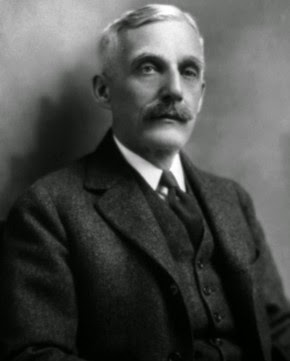
Andrew Mellon: Investor to Secretary of Treasury

Andrew Mellon
J.P. Morgan was not alone in having a keen eye for investments. Morgan, a financier with powerful influence and enormous wealth, had made investments in scientific discoveries as well as ventures that became successful. But Morgan did not have the monopoly of having a foresight for profits. Andrew Mellon was also a financier, visionary, and, government official. Mellon would bet his money in several ventures and capitalize in new technologies. From his sound investment decision he accumulated huge wealth and influence and allowed him to be respected and trusted by the Presidents of the United States.

Charles Schwab: Steel Maker and a Tragedy

Charles M. Schwab
One of the most desired resources during the Industrial Revolution was steel. Most countries that wanted to become industrialized must be able to produce their own steel. And the United States, one of the most industrialized and advance countries during the late 19th century, had produced their steel. Several men managed to capitalize on the need of steel and became rich. Among these men were Andrew Carnegie. But within the mist of Carnegie, another man grew to become an iconic industrialist. His name was Charles Schwab.

Wealth From Vices: James Buchanan Duke

James B. Duke
Cigarettes are vices for some, but a necessity for others. Regardless, some business profit from cigarettes, especially during its advent in the late 1800’s. It revolutionized how people can consume tobacco for a way cheaper and easier way. One man from the era of big business came to dominate the whole tobacco industry with cigarettes as his source of his wealth. 

Township and Village Enterprises: Owed by So Many to So Small

Mao proclaiming the foundation of
the People's Republic of China
The death of Mao Zedong brought waves of changes to Communist China. Under Mao, China suffered hardship through his failed Great Leap Forward and Cultural Revolution. The nation was in ruins. Many were poor, starving, and jobless. After his demise, a brief period became under Hua Guofeng. But he was later replaced by another formidable figure in Chinese politics – Deng Xiaoping. Under his authority China saw reforms that shook the foundations of communism. Among his projects were small business called Township and Village Enterprises.

John Warne Gates: From Barbed Wire to Riches

John Warne Gates
Barbed wire is a small tool that changes the world. It changed how ranchers grew their livestock. It’s a tool used to keep prisoners inside their prison. It changed the faces of battlefields forever. During the advent of this small but decisive tool, many took the opportunity to make some money from it. But one man stood to dominate the industry. A man that did not invent barbed wire but used it to made a fortune from it. A fortune that so huge that a million dollars can be easily loss in one poker game. 

Rodolphe Lindt: Chocolate Smooth as Silk

Rodolphe Lindt
In the 19th century, the tiny land lock country of Switzerland became the center of development for chocolate production. The advent of industrialization led to the commercialization and improvements to the production of once luxurious products and turning to a product that the masses could enjoy. Names like Jean Tobler and Daniel Peter were pioneers to the rise of chocolate. And among the most ingenious and successful of this chocolatiers was Rodolphe Lindt.

John Cadbury: The Sweet Legacy

John Cadbury
Besides Milton Hershey, there were already numerous chocolatiers that began manufacturing in Europe. The French, the Dutch, and the Swiss all had artisans dedicated to chocolate making. Royals from Spain and France had high regards and consumed chocolate in their respective courts. Eventually, the British soon joined the ranks of chocoholics in Europe. And one of the leading chocolatiers of the Industrial Age in Britain was the most recognizable as well, Cadbury, John Cadbury.

Popular Posts This Week